Archive for the ‘Our Thoughts’ Category

Jack Hanna’s Into the Wild-My Weekly Dose of Hope

Saturday, February 4th, 2012

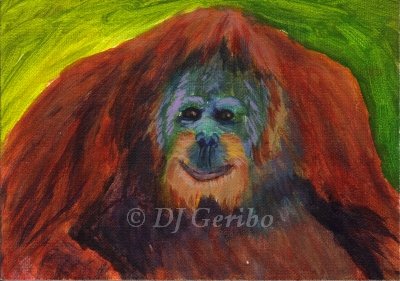
Every Saturday morning, especially during the winter months when I’m typically home on a weekend morning, I turn the TV on to watch Jack Hanna’s “Wild Kingdom” program. It has become my weekly dose of hope and encourages me to keep going when I see all the places he visits around the world where people are committed and dedicated to saving the lives of animals. I happened to catch it this morning and Jack was doing a countdown of his favorite “Zoo-tastic Adventures”.  Although the zoo where he works, the Columbus zoo, did come in second, his #1 pick was the Singapore zoo where there were baby white rhinos rubbed down with mud and the staff were walking orangutans around the park. Jack was so impressed and amazed by this beautiful zoo. I’m so impressed by and a huge fan of Jack Hanna!!!

 Orangutan Wildlife Eye Collectible Pin
Our price: $4.95


Black Panther Sighting

Monday, August 22nd, 2011

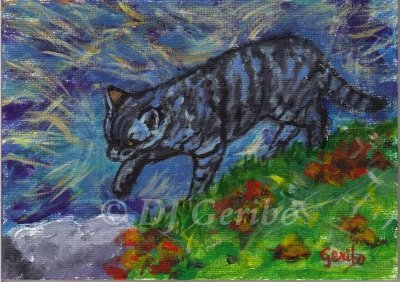
Image of Black PantherWe recently received an email from a customer who told us that while walking on her property, she spotted what she was sure was a black panther. She was, understandably, a bit unnerved, especially since this is near her home and she has grandchildren and pets who walk through her woods, as well. She was concerned, also, about telling too many people in case a ‘trophy hunter’ found out about it – she was mindful of the animal’s safety, too. She asked us for advice as to who she should inform and wanted to know our thoughts on this. Jim wrote back to her, thanking her for sharing her story with us, and recommended that although she may never see this animal again since sightings of black panthers are rare, he suggested that she should still use caution and never walk alone at night and keep her grandchildren and pets close to home, and she should contact the Northern Jaguar Project for guidance and more information. Sharing our land with nature and wildlife is something we always advocate. People need to be aware of the dangers when they decide to reside in some of the few remaining areas where endangered species live.

Being Kind to All Living Things

Friday, April 23rd, 2010

Red Fox Alert - original painting by cofounder DJ Geribo

Killing for Skins

One summer, when I was around eight years old, my mother took my siblings and I on a train ride to visit her parents in Utah. We also visited her sister in Utah, another sister in Nevada, and a brother who lived on a farm in Idaho. The farm was my favorite place and although this uncle was likely the poorest financially, I have the fondest memories of our week-long visit with him and his family.

One memory that stands out for me is the day my uncle took us to the mink farm where he worked. There were rows and rows of these small weasel type animals locked in cages and I was a little afraid of them when my uncle showed us the bites and scratches on his farm-worn hands. “Vicious” is the word my uncle used to describe the furry critters.

Years later I remembered his description and when I thought about the mink coats the skins of these small animals were used for, I thought that I would like to wear one someday. At that point in my life as a young adult, working as a fashion model in Boston, I thought killing foxes to make a fur coat was barbaric and I would never wear one. But I would wear a mink since these animals were not only vicious but they were bred specifically to kill and skin to make fur coats for those who could afford the expensive and beautiful wraps.

And now, many years later, after learning even more about animals, their plight in life, and how barbaric man can be to all animals, domestic and wild alike, I fight back tears every time I think about the small defenseless minks, locked in tiny cages on death row. I, too, would fight and bite anyone who had locked me in a tiny cage where I waited to die.

When I think about these animals, all animals who are used and abused for our pleasure, comfort, warmth, or any countless other reasons, I believe that we all have an inborn instinct to fight for our lives. From the tiny minks, to the harp seals, to the Bengal tigers, they all want to live the lives they were put here to live and have as much right as any human to do just that.

If we could only learn to appreciate and understand this and learn to live with them and see their true value on earth, their interconnectedness to us, I believe we would all live a richer and more balanced existence.

Earth Day’s 40th

Friday, April 23rd, 2010

This year marks the 40th anniversary of Earth Day. DJ and I had much to celebrate but we know there’s still so much that needs to be done.

We happened to watch a television program on our local PBS station titled “Earth Days” and realized that it is people just like us who will ultimately succeed in creating the world we want to live in.  It was strikingly obvious in the program that every U.S. President since the mid sixties has talked about the need for environmental policies, but the record shows that it’s usually individuals and small groups of concerned citizens who are the driving force behind adopting and strengthening our environmental laws.

The recent international conference in Copenhagen demonstrates that governments are almost powerless to effect any real change because they can not agree on what needs to be done in any meaningful way.  However, concerned individuals – regardless of their nationality – can take action now and not wait for any international consensus.

DJ and I do everything we can to reduce, reuse, and recycle.  We care for the land we are fortunate enough to own and do everything possible to protect and minimize our impact on the local wildlife that shares our land with us.  And, we do our best to inspire others and look for ways to raise their awareness of the impact their decisions have on our planet’s wildlife and habitat.  We realize that not everyone agrees with our personal philosophy and that’s OK.  We believe there are many who do share our vision for living a life that’s in harmony with nature instead of living a life that’s disconnected from nature.

And, it’s people like this that play a large part in how we are…

"Saving Wildlife Together"!

Wildlife Entertainment – at what price?

Tuesday, March 9th, 2010

Orca [Photo Credit: NOAA]If you watch the news, we’re sure you’ve either seen or heard about the death of one of SeaWorld Orlando’s animal trainers in an incident involving Tillikum, an adult male orca, on February 24th, 2010. To be sure, it’s a terrible tragedy. But, the tragedy goes beyond the loss of the young woman. Wildlife conservation and entertainment are vastly different concepts and there are very few examples we can think of where the two align.
(more…)

Why do we support Zoo Atlanta?

Monday, January 4th, 2010

We recently received an e-mail with a question from a person who is obviously dedicated to the welfare of wildlife. Here is the question she posed to us:

“You sound like a great organization but I don’t understand why you support a zoo. Wild animals belong in the wild, don;t you agree. Thanks for any reply.”

And, here was my reply:

Thank you for taking the time to write to us with your question regarding our support of Zoo Atlanta. We whole-heartedly agree with you that wild animals belong in the wild. However, we have also come to the conclusion through our research and commitment to saving wildlife, that although our first desire is that all wildlife should be able to exist in its natural habitat, that this optimal situation is becoming more and more difficult primarily due to habitat loss from human activities. That is why we support both wildlife conservation and habitat preservation. (In fact, I wrote an article about how these activities are inextricably intertwined in our Cofounders’ Message in this issue of our Eyes Alive Newsletter: Eyes Alive February 2009)

Also, we recognize that there are organizations more directly involved with wildlife and habitat issues and we use their research and scientific studies to formulate our own course of action as to how we can best help to save wildlife and habitat. The following succinctly states the challenge we are facing today with respect to the loss of species:

The reality of the current situation is that it will not be possible to ensure the survival of an increasing number of threatened taxa without effectively using a diverse range of complementary conservation approaches and techniques including, for some taxa, increasing the role and practical use of ex situ techniques.

This is from the opening paragraph of this IUCN publication.

With respect to our support of Zoo Atlanta, we are specifically supporting their ‘Give So They Stay’ Campaign which in turn supports their invaluable research and ongoing efforts to ensure that the critically endangered Giant Panda has the best chances for long term conservation and therefore that species survival.

And, again, deferring to another organization whom we have great respect for, the WWF maintains the following position on the role of zoos in conservation:

WWF has long supported the legitimate role of zoos in conservation, education, and research. Captive breeding programmes managed by zoos can provide positive benefits for species conservation if designed and used appropriately, and if they are part of a science-based conservation management plan for the species. Such programmes may act as a platform for zoologists, veterinarians and others to conduct research designed to enhance understanding of the biology of the species.

Again, you see the entire context of this paragraph.

We fully believe that Zoo Atlanta’s efforts with respect to their Giant Pandas is in alignment with these goals as well as our stated mission.

In conclusion, although we fervently wish to see all wildlife remain in its natural habitat as much as possible, until the majority of mankind recognizes and acknowledges the direct link that habitat destruction has on species extinction, we will undoubtedly need to rely on all possible and humane methods, even if less than ideal, to prevent the extinction of certain species. I hope this sheds some light on why we have chosen to support Zoo Atlanta’s ‘Give So They Stay’ campaign and why we will most likely continue to include accredited zoos among the organizations we support.

Most sincerely,

Jim Fontaine

Keeping a Positive Mental Attitude

Tuesday, December 15th, 2009

DJ and I work very hard at maintaining a ‘Positive Mental Attitude’. It isn’t always easy, but the alternative – having a negative mental attitude – is far worse. How can you tell whether or not someone has a positive or a negative mental attitude? Listen carefully to the people you converse with. If they frequently start sentences with: “I don’t…”, or “I can’t…”, or “I don’t want…” chances are they have a negative mental attitude — and, they probably aren’t even aware of it. It took DJ and I many months (and, we still slip up occassionally) of carefully listening to how we expressed ourselves and unflinchingly pointing out to each other when we began sentences in this fashion. On the surface, this may seem very simplistic — but, I can assure you it is very difficult to 1) notice in oneself, and 2) change the habit!

So, how do you go about changing a negative mental attitude into a positive one? First, you must listen carefully to yourself when you speak and whenever you find yourself starting a sentence with a negative, rephrase it into a positive. e.g. If you are running late for work, you may find yourself saying, “I don’t want to be late.” Instead of that statement (which is negative), try saying, “I want to be on time.” It’s truly amazing how negative thoughts are everywhere around us. Just listen to the news, television personalities, family, and friends closely and you will begin to notice just how frequently negative statements are voiced.

Deep down I have always been a positive, upbeat, can-do kind of person. But, what I have found is that it is easier to remain positive if you are always stating things in the positive.

My recognition of the true power of having a Positive Mental Attitude came to me in a very dramatic fashion earlier this year. On August 31st, I was fortunate enough to be playing in a golf tournament with friends (actually, the founders of the John Calder Memorial Tournament) in Lynn, Massachusetts. I have played in this tournament for 8 years in a row and this was the first year that I had the pleasure and privilege of playing with my friends and tournament founders.

Jim's foursome

The weather was beautiful and we were starting on the 14th hole in a shotgun start for 18 holes. Our foursome determined the order we would tee off in and as it happened, I was selected to be first. As I was selecting my club from my bag, I suddenly felt a very sharp pain in my abdomen, actually it was more like on my abdomen – which after a quick moment I determined was the result of a sting from a yellow jacket that had somehow made its way into my golf shirt! Youch! My stomach began turning a bright red around the sting and it was burning incredibly. Well, we laughed and joked about it — something to the effect that if I was allergic to bee stings, I had better jump on the cart and head in to the clubhouse because no one in the foursome was going to give me mouth-to-mouth! Typical ‘guys on the golf course’ humor aside, I continued with my pre-shot routine and teed up my ball.

If you know me at all, then you know that I am a golf fanatic. I have been playing the sport for around 35 years and there has never been a time when I didn’t thoroughly enjoy the game. And, I can honestly say this: everytime I step up to the ball on a par 3 hole, in my mind I am thinking, “In the hole.” And, this time, that’s exactly what happened. I shot my career first hole-in-one. 145 yards, 8-iron, ball lands 4 inches in front of the hole, checks up and drops in the cup. It was witnessed by another friend – in fact, the guy that I played golf with on my high school team – who was on the next tee box! If you’ve ever shot a hole-in-one, or even if you’ve just witnessed one, then you can appreciate the sheer thrill and excitement that results. And, it wasn’t just me that felt it. My friends were all truly and as genuinely happy as I was at that moment.

Jim Fontaine's 1st hole-in-one!

So, what does this have to do with having positive mental attitude you might ask? Well, let me say this, on the next par three hole, one of the members in our foursome made the comment, “I’ll never get a hole-in-one.” as he was teeing up his ball. And, in my mind, I said, “Maybe, just maybe, if you thought you could then maybe someday you will.”

Jim Fontaine's hole-in-one golf ball!

I will tell you this: when I teed up my ball, I was thinking “In the hole.”

Panda Pictures from our Partner

Thursday, October 8th, 2009

Zoo Atlanta sent us some photos of their Giant Pandas to share with you!

Here’s another great photo!

Earth Day 2009

Wednesday, April 22nd, 2009

Today is Earth Day!  For us, it is cause for celebration, if only for the fact that at least one day a year has been set aside for people to consider the wonderful world we live in.  The reality is that DJ and I truly try to live each day aware of our roles in being, as we like to call it – good stewards of the earth.  Normally, we take several hours on Earth Day to pick up the trash alongside the road we live on for a good mile or so.  (We do this throughout the year as well, but it’s especially meaningful for us to take some small action to actually celebrate Earth Day each year.)  However, Earth Day this year was exceptionally wet with a LOT of rain coming in sheets for much of the day!  So, we will do our roadside pickup this weekend.  However you choose to celebrate Earth Day (and, we hope that you do), take a moment to reflect on where you live and what the environment may be like 10, 20, or even 50 years from now.  And, ask yourself – will our portion of the earth be better, worse, still inhabitable, or maybe even a paradise?  We all share the same resources – whether with our neighbors or, on the larger scale, with other countries.  We have hope everyday and act upon that hope with passion that the world we eventually will leave behind, as everyone must, will be better than the one we are currently enjoying and doing our parts to protect.

Wildlife Conservation and Habitat Preservation

Thursday, February 26th, 2009

It’s important to recognize that these two activities are inextricably linked. Humans, as a species, cannot hope to accomplish one without also acknowledging the importance of the other.  If we continue our destruction of wildlife habitat — such as the clearing of land in the tropical rainforest for the raising of cattle or agriculture — then we are effectively consigning wildlife to an existence only within zoos and captive breeding programs.  In our opinion, this is not the same as wildlife in its natural habitat.  Although we may be able to conserve species in this manner, they will certainly lose their designation as wildlife.  In fact, there is little difference between this type of animal conservation and that of domesticated species — other than the fact that we may not eat the so-called wild species saved in this fashion.

Somehow, we need to realize that in order for wildlife to be truly considered wild, it necessarily follows that it must be allowed to coexist with humans in its natural, or wild, habitat.  Although great strides have been made in the humane treatment and the living conditions of wild animals kept in captivity, they are still captive.  We do not discount the wonderful educational and research opportunities for gaining knowledge about our planet’s wildlife that zoos and aquariums offer.  And, in fact, they provide the means for individuals to see firsthand many species that they would otherwise never have the opportunity to see in the wild. However, in order for wildlife to fulfill its natural purpose of enriching our planets biodiversity — simply by its sheer act of existing — we must also make the connection that only when species can live in their original and unaltered habitat can they be considered truly wild.

This is exactly why we support both wildlife conservation and habitat preservation as part of our mission and vision.  For it is only by accomplishing both that mankind can claim to be living in peaceful coexistence with wildlife — where both mankind and wildlife equally represent the full richness of biodiversity that is the natural state of our planet.

Help us fulfill our Mission and Vision — tell others about what we’re doing to save and protect wildlife and habitat!